

NeuroMap™ ADHD/Neurodivergence
How is ADHD showing up in your nervous system, and what does your nervous system need to function better?
ADHD & Neurodivergence doesn’t look the same in every nervous system.
Two people can have ADHD and struggle for very different reasons. One may constantly seek stimulation and movement. Another may become overwhelmed by sensory input. Someone else may struggle most with activation, transitions, emotional intensity, sleep, or settling after stress.
Dunkin NeuroMap™ for ADHD looks beneath the diagnosis to understand how ADHD is manifesting across your nervous system.
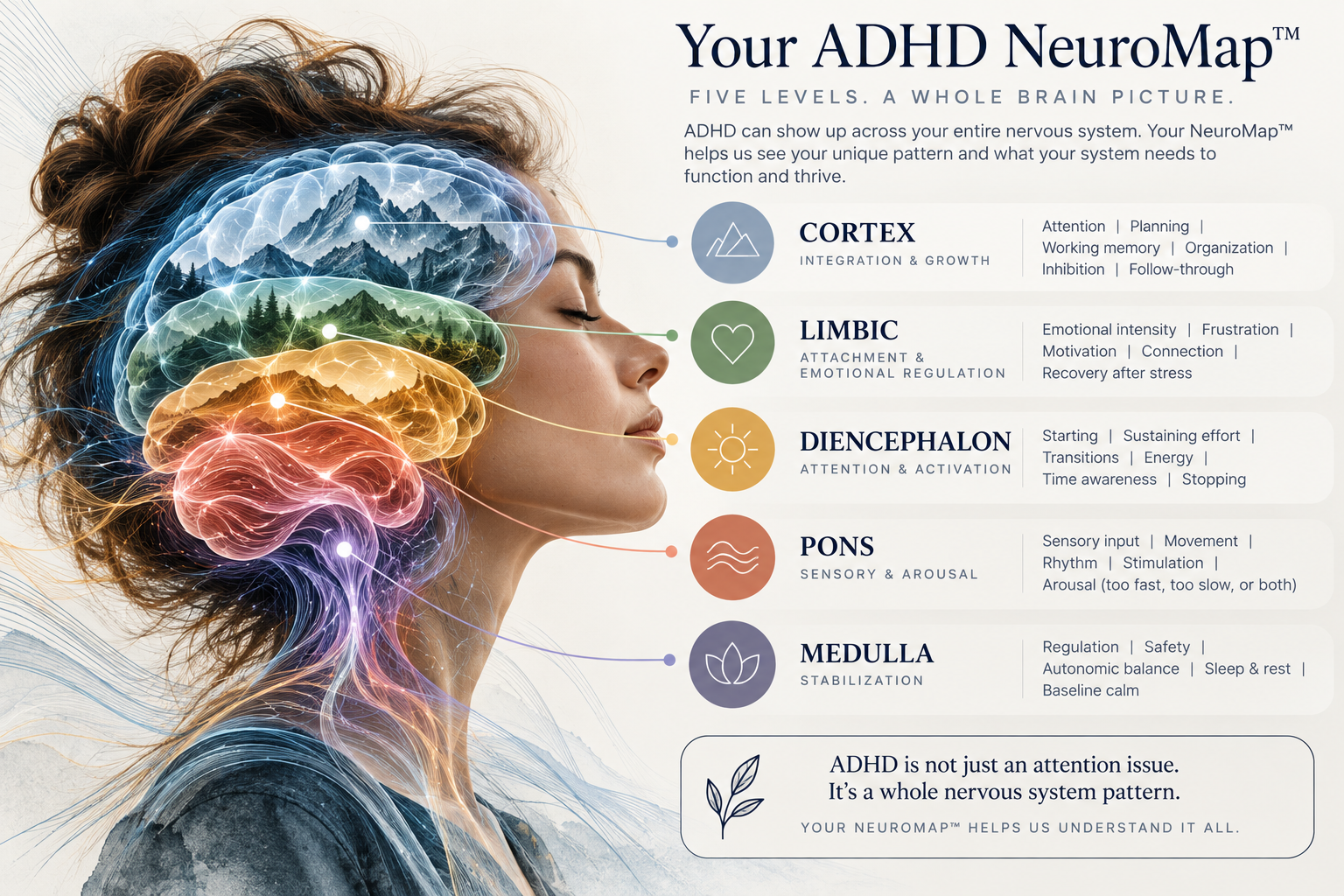
Your ADHD NeuroMap™
Instead of simply measuring ADHD symptoms, your NeuroMap™ explores patterns in areas such as:
Arousal & regulation — Do you run fast, slow, or shift between the two?
Sensory processing — What organizes you, and what overwhelms you?
Activation & energy — How do you start, sustain, shift, and stop?
Attention & stimulation — When do you need more input—or less?
Emotional regulation — How quickly do emotions rise and settle?
Executive functioning — How do you plan, organize, remember, and follow through?

We don’t start by asking you to try harder.
We start by understanding what your nervous system is doing.

The neurodivergent brain isn’t a broken version of a neurotypical brain.
It processes, responds, and engages with the world differently.
The goal isn’t to change who you are. It’s to understand how your system works—and help you work with it.
Step 1: Assessment
What happens first
You’ll complete a secure NeuroMap™ ADHD assessment in the comfort of your home.
You’ll answer questions current functioning.
There are no right or wrong answers.
Steps
Plan for about 30-45 minutes.
Your NeuroMap™ Coach is available guide you through the process.

Step 2: Schedule your Debrief Session
We’ll walk through your results, explore what they mean for you, and talk about next steps.
Understand Your Pattern
See how ADHD is showing up across your five brain levels.
Connect the Dots
Explore how these patterns influence your daily life.
Plan What’s Next
Identify personalized strategies and plan how you and your NeuroMap™ coach will accomplish these goals.
Step 3: Begin the Program
Your NeuroMap™ gives you a starting point. Now we put it into action.

Meet With Your Coach
Get oriented, set goals, and make a plan.
Watch & Learn
Short videos help you understand how your brain works.
Use Your Workbook
Connect what you’re learning to your everyday life.
Practice Your Daily Dose
Small practices designed for your nervous system.
Stay Supported
Get coaching, accountability, and help along the way.
“Understand your pattern. Build what your brain needs. Practice it in real life.”

Step 4: Reassess & Adjust

“As your nervous system changes, your plan changes with it.”
After Each Phase-See What’s Changing
Repeat your NeuroMap™ to see how your patterns have shifted.
Notice What’s Working
Identify where things are getting easier—and where you still need support.
Adjust Your Plan
Use your new map with your coach to decide what to keep, change, or focus on next.

What’s Included in the Dunkin NeuroMap™ ADHD/Neurodivergence Program
NeuroMap™ ADHD Assessment
See how ADHD shows up across your nervous system.Personalized Debrief
Understand your patterns and what your system needs.Coaching Sessions
Set goals, build strategies, and put them into practice.Videos
Short lessons to help you understand how your brain works.Workbook + Daily Dose
Simple tools and practices for everyday life.Coach Support
Get accountability, answers, and help staying on track.Progress NeuroMaps™
Reassess, track change, and guide what comes next.
Ready to see how ADHD
shows up in your nervous system?
NOT SURE WHERE TO START…
“When we understand the pattern, we can stop fighting the brain and start working with it.”